

The journey from a child’s first breath to their first step into a formal school building is one of the most rapid and remarkable transformations in human life. During these first five years, the human brain develops more quickly and comprehensively than at any other period. Every smile, every stumble, and every spoken word represents a major milestone that shapes how a child will interact with the world for decades to come. Navigating this fast-paced timeline requires parents and guardians to balance basic biological needs with evolving educational and social structures. It can feel overwhelming to manage the daily shifts in physical and cognitive abilities while simultaneously planning for the future.
As families navigate these initial years, they quickly realize that raising a well-rounded individual involves a massive network of support systems. No household operates entirely in isolation, and the introduction of outside assistance often marks the first major transition for a young family. Whether parents are returning to work or seeking to enrich their child’s routine, identifying professional care networks is crucial. Introducing high-quality infant childcare provides a secure environment where trained professionals can track early milestones, establish healthy sleep patterns, and provide the intense sensory stimulation necessary for infants to understand their surroundings.
The First Six Months: Setting a Strong Foundation
During the initial six months of life, a baby changes from a completely dependent newborn into a curious infant who actively observes their immediate environment. Physical growth during this period is astonishingly rapid. Parents will notice their baby learning to lift their head during tummy time, tracking moving objects with their eyes, and eventually rolling over from stomach to back. Cognitive and social milestones are equally profound during these early months. An infant begins to recognize familiar voices, responds to external sounds with attention, and offers intentional smiles to human faces.
Managing this period of rapid physical adjustment requires a high degree of logistical planning, especially for households where parents maintain full-time careers. The search for a local facility that can mirror the nurturing atmosphere of the home becomes a primary task for many families. Caregivers often spend hours researching local options, using search engines to find a dependable infant daycare near me that offers low staff-to-child ratios and strict safety standards. Finding a convenient and reputable local care provider ensures that the child receives personalized attention during these delicate months of development, creating a seamless handoff between parents and early educators each morning.
Months Seven to Twelve: Emerging Independence and Mobility
As infants enter the second half of their first year, their desire to interact with the world expands significantly. Between seven and twelve months, babies begin to sit without support, crawl across the floor, and eventually pull themselves up to a standing position using furniture. This newfound mobility completely alters how they learn about their environment. They grasp small objects, drop toys to observe cause and effect, and mimic simple gestures like waving goodbye. Language skills also take a major leap forward as babbling transforms into recognizable consonant sounds and the child begins to understand simple commands.
This period of intense physical and mental exploration means that the child’s care environment must adapt to provide safe spaces for movement and discovery. Transitioning into dedicated toddler care spaces or highly structured infant rooms becomes necessary as the child outgrows passive crib settings. These specialized environments are designed with soft surfaces, low climbing structures, and age-appropriate toys that encourage fine motor development without presenting safety hazards. Early childhood educators in these settings understand how to channel a child’s budding independence into positive learning experiences, guiding them through the initial stages of parallel play and helping them adapt to a shared group schedule.
The Legal and Financial Scaffolding of Early Parenting
While physical and educational milestones dominate the daily routine of a growing family, the structural and financial stability of the household forms the essential foundation that makes this growth possible. Raising a child from infancy to school age requires significant financial investment, careful budgeting, and a clear alignment of parental responsibilities. When parents do not live in the same household due to separation or divorce, ensuring that both parties contribute equitably to the child’s upbringing is vital for long-term security. Emotional harmony in the home is directly tied to financial predictability, and children thrive best when their material needs are met without parental conflict.
In complex family situations, establishing a formal, legally binding framework for financial support is a necessary protective step. Consulting a qualified child support lawyer allows parents to navigate local family court laws, calculate fair financial contributions, and ensure that expenses for medical care, nutrition, and early schooling are legally secured. This guidance ensures that legal agreements adapt as the child grows, taking into account rising educational and healthcare expenses. By solidifying these legal protections early, families can eliminate ongoing financial disputes, allowing both parents to focus their energy on supporting their child’s developmental transitions.
Age One to Two: The Toddler Exploration Phase

The transition into the second year of life is marked by an explosion of language, mobility, and emotional complexity. Between twelve and twenty-four months, toddlers transform into walking, talking individuals with distinct personalities and strong personal preferences. They begin to form simple two-word phrases, identify familiar objects by name, and follow simple instructions. Their physical coordination improves dramatically, allowing them to kick a ball, stack small blocks, and climb stairs with assistance. This is also the stage where toddlers begin to express frustration through tantrums, as their desire to communicate often outpaces their verbal abilities.
To support this intense phase of socialization and language acquisition, immersion in a professional community environment can be incredibly beneficial. Enrolling a child in a reputable neighborhood daycare center exposes them to a wider peer group and a predictable daily routine outside the home. Within these settings, toddlers learn the difficult but crucial skills of sharing toys, taking turns, and listening to adult instructors who are not their primary parents. This daily structure helps children develop a sense of expectation, as they learn that specific activities always follow others. This predictable structure builds emotional resilience and reduces anxiety during transitions.
Age Two to Three: Growing Curiosity and Health Maintenance
By the time children reach their third year, their cognitive abilities allow them to engage in complex pretend play, sort objects by shape and color, and express a wide range of emotions. Their vocabulary expands to hundreds of words, and they can comfortably hold simple conversations with family members and peers. This is the age of constant questioning, where the word “why” becomes a central tool for understanding how the world operates. Fine motor skills also take a major step forward, as children learn to hold a crayon with their fingers rather than their fist, turn book pages one at a time, and attempt to dress themselves.
As a child’s physical body grows and their diet expands to mirror that of an adult, maintaining routine preventative healthcare becomes a major priority for parents. Scheduling a regular appointment with a trusted family dentist should happen early in this developmental window to monitor the eruption of primary teeth and ensure proper jaw alignment. These early dental visits are designed to be positive and non-threatening, teaching the child that oral healthcare is a normal, healthy part of daily life. The dental team can identify early signs of decay, offer brushing guidance, and discuss childhood oral habits.
Age Three to Four: The Leap Into Structured Classrooms
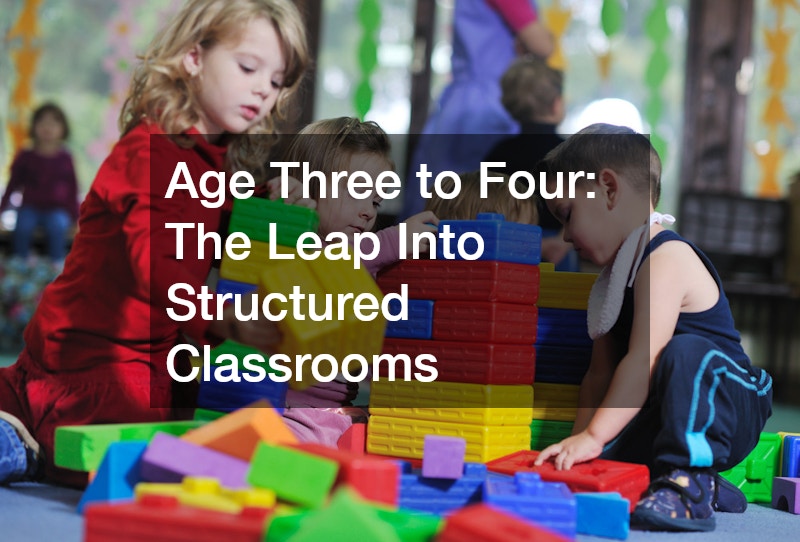
The transition from age three to four represents a significant shift from informal, play-based care to more intentional early childhood education. Children at this stage are developing a strong sense of self and are capable of forming deep friendships with their peers. Their storytelling abilities become highly creative, and they can easily recall stories or events that happened days in the past. Physically, their balance improves to the point where they can stand on one foot for a few seconds, hop, and catch a large ball with their arms extended.
To maximize this period of intense intellectual curiosity and social readiness, many families choose to transition their children into a formal preschool program. These educational environments introduce children to the foundational mechanics of a classroom, such as sitting in a circle for story time, working independently at a desk, and participating in organized group projects. The curriculum fosters early literacy, mathematical concepts, and scientific curiosity through hands-on activities. Children learn to follow multi-step directions from a teacher, resolve peer conflicts through verbal communication, and manage their personal belongings independently, all of which are critical indicators of future school readiness.
Age Four to Five: Preparing for Academic Expectations
As children enter their final year before primary school, their cognitive and social abilities reach a level of sophistication that allows for deeper academic preparation. Four-year-olds are highly capable of regulating their behavior, understanding the consequences of their actions, and demonstrating empathy toward classmates who are upset. Their language skills allow them to use complex sentences, tell detailed stories, and ask specific questions about abstract concepts. Physically, their fine motor control is advanced enough to allow them to write simple letters, draw recognizable human figures, and use safety scissors with accuracy.
Enrolling a child in a dedicated pre k classroom during this final year ensures that they develop the specific stamina and cognitive skills required for the kindergarten environment. These classrooms closely mirror the schedule and structural expectations of an elementary school, helping children become accustomed to a full day of structured activities. Teachers focus heavily on early reading skills, phonics, number sense, and structural problem-solving. Beyond academics, these programs emphasize critical social-emotional skills, such as waiting patiently in a line, focusing on a single task for an extended period, and moving fluidly between different activity stations without experiencing emotional distress.
The Kindergarten Transition: Sensory Readiness and Alternative Options
The final transition into formal kindergarten represents the culmination of all the early milestones and services that have supported the child since infancy. As parents prepare for this major milestone, they often carefully consider which educational environment will best support their child’s unique learning style and personality. While local public schools are an excellent choice for many, other families look toward alternative educational frameworks that offer specialized language immersion, advanced scientific curricula, or smaller class sizes. Selecting a comprehensive private school program can provide a tailored educational experience that focuses on holistic child development and critical thinking from the very beginning.
Regardless of the chosen educational path, a child’s success in the classroom depends heavily on their physical senses functioning perfectly. Visual tracking and clarity are essential for learning to read, copying information from a whiteboard, and interacting safely on the school playground. Parents should schedule a comprehensive pediatric eye exam before the school year begins, and if corrective lenses are required, visiting a specialized kids eyeglasses store ensures the child receives frames that fit comfortably and are durable enough to withstand daily recess activities. Ensuring perfect visual clarity removes hidden barriers to learning, allowing the new student to focus entirely on their lessons.
An Integrated Network for Long-Term Success
The journey from the cradle to the kindergarten classroom is a rapid, beautiful, and sometimes complex process that shapes the very trajectory of a child’s life. Each developmental milestone, from an infant lifting their head to a five-year-old reading sentences, requires a unique blend of parental support and professional community services. Families do not have to navigate this extensive timeline alone; instead, relying on a robust network of educators, legal professionals, and medical experts ensures that every aspect of a child’s well-being is carefully monitored and nurtured.
By understanding what milestones to expect at each age and proactively connecting with essential local services, parents can build a secure, enriching framework for their children. Whether it is securing the right early care environment, protecting the household’s financial stability, or ensuring physical health through dental and vision care, every single step plays a vital role in preparing a child for the future. When a child finally walks through the school doors on their first day of kindergarten, they do so backed by years of thoughtful preparation, healthy development, and an integrated system of care that has set them up for a lifetime of happiness.