


Key Takeaways:
- Kids refuse new foods for many reasons, including development, sensory sensitivity, emotions, and a need for control—not just pickiness. Understanding this helps you respond with patience instead of pressure.
- Taste changes over time, and kids usually need repeated, no-pressure exposure before they accept a new food. Familiarity builds acceptance more than persuasion.
- Toddlers are naturally cautious, so small portions, routine, and low-pressure exposure work best. The goal is familiarity, not forcing them to eat.
- Preschoolers respond well to play and involvement. Letting them help in the kitchen or make simple choices makes new foods less intimidating.
- School-age kids gain independence and are influenced by peers, so involving them in planning and preparation helps them feel more open to trying new foods.
- Teens respond better to respect and collaboration than control. Giving them choice and talking about food in practical terms works better than rules or pressure.
- Across all ages, the key is consistency, repeated exposure, and calm mealtimes. Avoid pressure tactics and focus on normal, routine introductions of new foods.
Getting kids to try new foods can feel like a moving target. One month they love bananas, the next they act like you’ve offered them something completely unrecognizable. The truth is, food acceptance isn’t just about “being picky”—it changes as kids grow, develop, and start asserting independence in different ways.
Instead of using one approach for all ages, it helps to understand how eating behavior evolves from toddlers to teenagers. Once you see what’s happening behind the scenes, it becomes much easier to guide kids toward more variety without constant mealtime stress.
Why Do Kids Resist New Foods at Different Ages?

Food resistance in kids is rarely just about taste. It’s usually a mix of biology, development, and learned behavior working together. From an evolutionary standpoint, children are naturally cautious about unfamiliar foods because their bodies are designed to avoid potential danger. In early human history, unfamiliar foods could mean toxins or illness, so hesitation was protective.
Today, that instinct still shows up as “picky eating,” especially in early childhood when kids are most sensitive to change.
But beyond instinct, there are deeper layers influencing resistance:
Control and independence:
Food is one of the first areas where children realize they have decision-making power. Refusing food isn’t always about dislike—it can be a way of asserting autonomy. Even toddlers quickly learn that saying “no” gets a reaction, which reinforces the behavior.
Sensory sensitivity:
For many kids, especially toddlers and preschoolers, texture can matter more than taste. A food might be rejected because it feels slimy, too crunchy, too soft, or even mixed with other foods. Smell and visual appearance also play a major role, sometimes triggering rejection before the first bite is even taken.
Past negative experiences:
A single bad moment—like gagging on a food or being forced to eat it—can create a strong emotional memory. That experience can linger and influence how the child reacts to the same food in the future, even if the food itself wasn’t the problem.
Developmental shifts:
Appetite, curiosity, and willingness to try new things naturally fluctuate with age. Some phases of childhood are simply more cautious, while others are more exploratory. This means resistance is often temporary and tied to where the child is developmentally, not a fixed personality trait.
When you zoom out, it becomes clearer that refusal isn’t just stubbornness. It’s often a combination of protection, learning, and emotional response. That perspective shift changes the approach from pressure to patience and guided exposure.
How Does Taste Development Change as Kids Grow?
Taste development is not static—it evolves significantly as children grow, and much of it is shaped by repeated exposure rather than innate preference alone.
At birth, babies are biologically drawn to sweet flavors because breast milk naturally contains lactose. Bitter or sour tastes, on the other hand, are often rejected because they were historically associated with potential toxins in nature. These early instincts lay the foundation for how children initially respond to food.
As children grow, their taste system becomes more adaptable, but their willingness to accept new foods depends heavily on experience.
Here’s a deeper look at how this shifts across stages:
Early childhood:
At this stage, children prefer very familiar, predictable flavors. They tend to stick to a narrow range of accepted foods because consistency feels safe. Even small changes in texture or presentation can lead to rejection. Repetition is key here, even if no immediate acceptance happens.
Preschool years:
Curiosity starts to increase, but caution is still strong. Kids may show interest in new foods visually or through play, but hesitation often follows when it’s time to eat. This is also when imagination becomes a powerful tool in shaping acceptance.
School age:
Children begin to become more socially aware. They notice what peers are eating and may become more willing to try foods they previously rejected. Exposure outside the home—like school lunches or social gatherings—plays a bigger role in shaping preferences.
Teen years:
Food choices become tied to identity, independence, and lifestyle. Teens may experiment more, but they also become more selective based on personal preference, peer influence, and even health or fitness goals.
Across all stages, one principle stays consistent: repeated exposure is far more effective than persuasion. Most children need multiple neutral, pressure-free encounters with a food before it becomes acceptable, even if they don’t immediately eat it.
Toddlers (1–3 Years): What Actually Works at This Stage?
Toddlerhood is often the most challenging phase for introducing new foods. This is when neophobia—the natural fear of unfamiliar foods—is at its strongest. It’s not unusual for toddlers to accept a food one day and reject it the next, even without any obvious reason.
At this stage, consistency and low pressure matter far more than variety or volume.
What actually helps:
- Offering very small portions of new foods so they feel less overwhelming
- Placing new foods alongside familiar favorites without expectation
- Allowing full sensory exploration (touching, smelling, even squishing)
- Keeping mealtimes predictable so food doesn’t feel like a surprise event
- Avoiding emotional reactions to refusal, which can reinforce resistance
One important mindset shift here is understanding that refusal is not final. A toddler might reject a food repeatedly simply because it feels unfamiliar, not because they genuinely dislike it.
Practical strategies that tend to work better over time:
- Changing preparation styles (steamed one day, roasted another)
- Mixing new ingredients into familiar dishes gradually
- Offering simple choices instead of direct demands
- Eating together so children can observe without pressure
At this stage, exposure builds familiarity, and familiarity builds acceptance. The goal is not variety—it’s trust.
Preschoolers (3–5 Years): How Do You Make Food Exploration Fun?
Preschoolers are naturally curious, but they are also highly driven by control and imagination. This makes food acceptance less about nutrition logic and more about experience.
Instead of focusing on “getting them to eat,” it helps to turn food into something they can interact with emotionally and creatively.
What works best at this stage:
- Making meals feel like exploration rather than obligation
- Letting kids participate in simple cooking tasks
- Giving them small but meaningful choices
Engagement ideas that tend to work well:
- Building “color plates” where kids choose foods from different colors
- Allowing them to stir, wash, or arrange ingredients during cooking
- Offering taste “missions” where they try tiny samples without pressure
- Renaming foods in playful ways to reduce hesitation
This is also where presentation becomes surprisingly powerful. A food they previously rejected may suddenly become acceptable if it looks different or is presented in a fun format.
Repetition still matters, but it can be disguised through variety. For example, offering the same vegetable in different forms across the week keeps exposure consistent without feeling repetitive to the child.
School-Age Kids (6–10 Years): How Do You Encourage Independence?
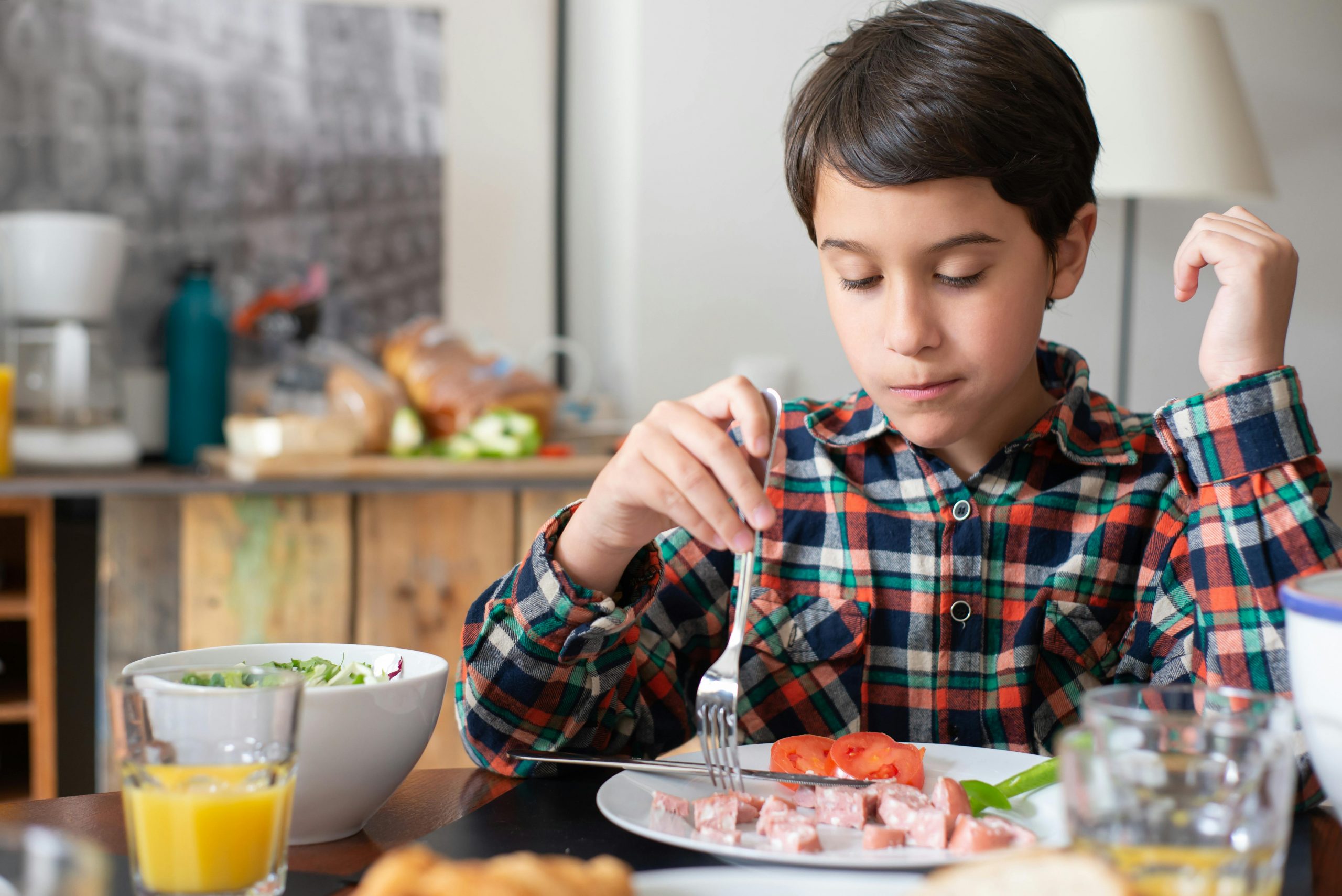
At this stage, children begin to develop stronger opinions influenced by school environments, friends, and social awareness. They are more receptive to logic and reasoning, but they still need structure.
The goal here is to balance independence with gentle guidance.
Helpful strategies include:
- Involving kids in weekly meal planning so they feel ownership
- Introducing the idea of trying “one bite” without pressure to finish
- Connecting food to energy, performance, and activities they care about
- Gradually exposing them to different cultural foods and flavors
Responsibility becomes a powerful tool at this stage:
- Letting them prepare parts of their own lunchbox
- Including them in grocery shopping decisions
- Teaching them to recognize simple ingredients and food labels
Peer influence can also work positively. When children see classmates trying new foods, they are often more willing to experiment themselves.
The key is making food exploration feel like a choice rather than a rule.
Tweens and Teens: Why Does Control Matter More Than Tricks?
During the tween and teen years, food becomes more than just nutrition—it becomes tied to identity, autonomy, and self-expression. Attempts to control food choices often lead to resistance because teens are actively working to define themselves.
Instead of directing behavior, collaboration works better.
More effective approaches include:
- Respecting preferences while still offering variety
- Avoiding labeling foods as strictly “good” or “bad”
- Allowing flexibility within an overall balanced structure
- Having open conversations about how food affects mood, energy, and focus
Teens tend to respond more to reasoning than pressure. If they understand the impact of nutrition in real-life terms—sports performance, concentration, or skin health—they are more likely to experiment on their own.
At this stage, avoiding conflict is crucial. The more control teens feel they have, the more open they often become over time.
What Strategies Work Across All Ages?
While each developmental stage requires a slightly different approach, some foundational strategies remain effective throughout childhood.
These include:
- Repeated exposure without pressure or emotional reaction
- Modeling by consistently eating a variety of foods yourself
- Offering small portions of new foods to reduce overwhelm
- Pairing unfamiliar foods with familiar favorites
- Keeping language neutral instead of judgmental around food
Additional techniques that reinforce acceptance:
- Making food visually appealing without overcomplicating it
- Keeping mealtimes calm, structured, and predictable
- Encouraging tasting without requiring full consumption
- Introducing new foods slowly rather than in large groups
One of the most important long-term factors is consistency. Kids respond more strongly to repeated patterns than to occasional efforts. When exposure becomes part of everyday life rather than a special event, acceptance tends to grow naturally over time.
What Role Does Environment Play in Eating Habits?
The environment around food often matters as much as the food itself. Kids pick up cues from how meals are structured, how adults behave, and even the emotional tone of mealtimes.
A stressful environment can make even favorite foods less appealing. On the other hand, a relaxed and consistent setting encourages curiosity.
Key environmental factors include:
- Screen-free meals to increase attention to food
- Eating together as a family when possible
- Keeping mealtime conversations neutral or positive
- Avoiding pressure or bargaining
Small adjustments in environment can significantly improve willingness to try new foods.
How Do Routines Shape Eating Behavior Over Time?
Consistency helps children feel secure, and that sense of security naturally extends to food choices as well. When meals follow a predictable rhythm—breakfast, lunch, dinner, and planned snacks—kids are less likely to feel overwhelmed or resistant when something unfamiliar shows up on their plate. Structure reduces uncertainty, and uncertainty is often what triggers refusal in the first place.
In fact, structured routines often do more to support healthy eating habits than repeated persuasion ever could. When children know what to expect, they have more mental space to explore rather than react defensively. This is also why broader family habits matter so much. When daily life is built around stability—regular sleep, consistent meal timing, and shared family activities—food becomes part of a bigger rhythm rather than an isolated challenge. In many households, something as simple as creating a holistic wellness routine helps anchor these behaviors, making mealtimes feel less like negotiations and more like a normal, low-pressure part of the day.
Over time, this predictability builds trust. Kids start to associate food with safety rather than pressure, and that shift alone can make them more open to trying new foods without resistance.
Common Mistakes Parents Make Without Realizing It
Even well-intentioned strategies can backfire if they create pressure or negative associations.
Some common pitfalls include:
- Forcing kids to “clean their plate”
- Using dessert as a reward for eating vegetables
- Introducing too many new foods at once
- Reacting strongly to food refusal
- Giving up too quickly after one rejection
The biggest issue is pressure. Once food becomes tied to stress or conflict, acceptance usually drops.
Instead, the focus should stay on exposure, patience, and neutrality.
How Long Does It Take for Kids to Accept New Foods?
There’s no fixed timeline, but research and experience suggest it can take 10–15 exposures before a child consistently accepts a new food.
That might sound like a lot, but exposure doesn’t always mean eating. It can include:
- Seeing the food on their plate
- Touching or smelling it
- Watching others eat it
- Taking a small bite
Each interaction builds familiarity, which is the foundation of acceptance.
Can Kids Learn to Like Healthy Foods Over Time?
Yes, but not through pressure or quick fixes. Preference develops through repetition, environment, and emotional association.
When healthy foods are consistently present without pressure, kids gradually become more willing to try them. The goal is not immediate acceptance, but long-term familiarity.
Over time, even previously rejected foods can become normal parts of their diet.
Wrapping It Up
Helping kids try new foods isn’t about finding one perfect trick—it’s about understanding how their needs change as they grow. Toddlers need repetition and safety, preschoolers need play and exploration, school-age kids need autonomy, and teens need respect and collaboration.
When you match your approach to their stage of development, mealtimes become less about resistance and more about gradual discovery. And over time, that steady exposure does more than any short-term strategy ever could—it builds a foundation for a more open, balanced approach to food that can last well beyond childhood.